


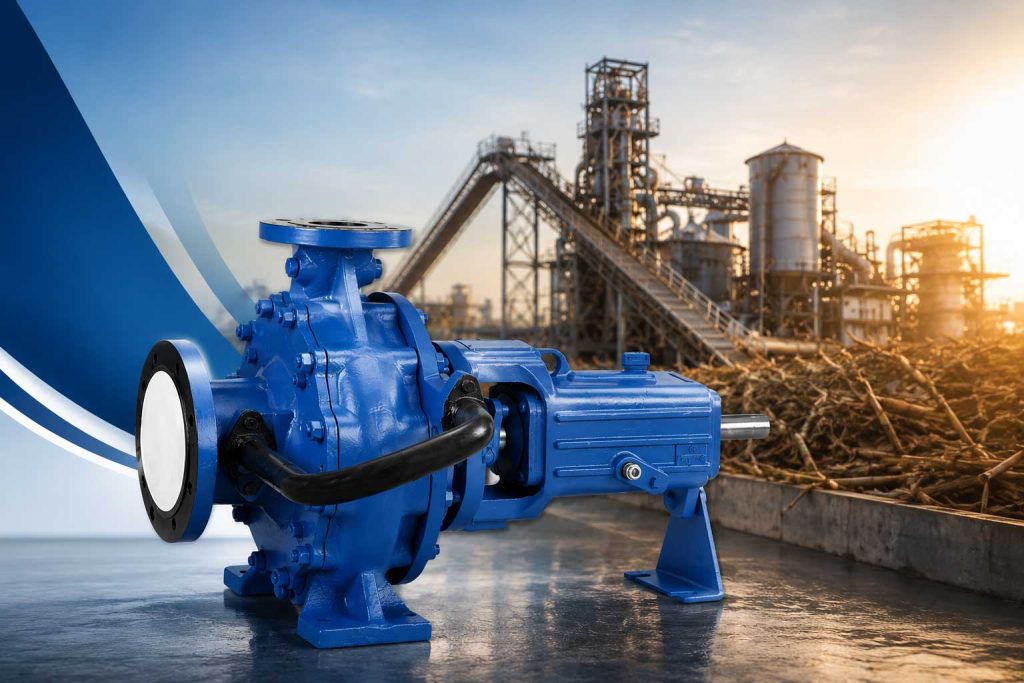
Pre-Crush Season Readiness: Pump Maintenance Protocols for Sugar Mill Juice Extraction Lines
A sugar mill in Maharashtra loses 18 hours of production in Week 2 of the crushing season. Not from a cane shortage. Not from a boiler breakdown. From a centrifugal pump on the primary juice extraction line — a pump that had been flagged in the pre-season maintenance log six weeks earlier, noted as requiring bearing replacement, and never actioned.
The cost: approximately 900 tonnes of cane unprocessed, demurrage charges on three waiting cane trailers, and an emergency procurement call at 11 PM to source a replacement bearing shaft assembly from the nearest industrial supplier — 340 kilometres away.
This is not an unusual story. It repeats itself every crushing season across sugar mills in Maharashtra, Karnataka, Uttar Pradesh, and the sub-Saharan African belt. The pre-crush maintenance window — typically six to ten weeks between seasons — is the single most leveraged period in a sugar mill’s operational calendar. What happens in that window determines whether the mill runs its full campaign or loses production hours it cannot recover.
Pumps sit at the centre of that equation. In a juice extraction line, pumps handle raw juice, clarified juice, syrup, condensate, and process water — in continuous operation, under elevated temperatures, with abrasive and corrosive media. They are among the highest-duty components in the mill. And they are among the most frequently neglected in pre-season maintenance planning.
Why Pumps Are the Weak Link in Juice Extraction Lines
Sugar mill juice extraction imposes a demanding combination of operating conditions on centrifugal and positive displacement pumps: high solids content in raw juice, elevated temperatures in evaporator condensate circuits, chemical dosing demands in clarification, and near-continuous duty cycles across a six-month crushing campaign.
The wear mechanisms are well-documented. Impeller erosion from suspended solids in raw juice, shaft seal degradation from temperature cycling, bearing fatigue from misalignment accumulated over the prior season, and corrosion in juice heater condensate lines. None of these develop overnight. All of them are detectable — and correctable — during the pre-season window.
Key Insight: Pump failures during the crushing season are almost never sudden. They are the visible end of a degradation curve that was measurable weeks before the season started.
The mills that consistently achieve full campaign utilisation have one practice in common: structured, documented pump maintenance protocols executed before the first cane arrives — not reactive maintenance triggered by the first breakdown.
The Pre-Season Maintenance Window: What It Is and Why It Is Non-Negotiable
For most sugar mills operating in India and sub-Saharan Africa, the pre-crush maintenance window opens six to ten weeks before the scheduled start of crushing. This is the only period in the operational year where pumps can be taken fully offline, stripped down, inspected, and rebuilt without production impact.
The window is non-negotiable for one reason: spare parts availability. Identifying a worn impeller or a failing mechanical seal during pre-season gives the procurement team four to six weeks to source the correct replacement from verified suppliers. Identifying the same fault at Week 3 of the campaign means emergency procurement, premium freight, and production loss while you wait.
Across operations in India, East Africa, Indonesia, and the Gulf, EuroIndustriel’s engineering team observes the same procurement failure mode repeatedly: mills that run informal pre-season checks, identify issues, but delay parts ordering until the fault becomes critical. Structured maintenance protocols eliminate this delay by building procurement triggers directly into the inspection framework.
Critical Pump Inspection Protocol: A Practical Framework for Plant Engineers
The following framework applies to centrifugal pumps serving juice extraction, juice heating, clarification, and condensate circuits. Adapt timing and tolerances for your specific equipment ratings.
- Step 1 — Mechanical Integrity Audit. Strip the pump casing and inspect the impeller for erosion, pitting, and dimensional wear against the manufacturer’s tolerance specification. On raw juice pumps handling high-solids content, impeller wear exceeding 10–15% of original vane thickness significantly reduces hydraulic efficiency and increases cavitation risk during the campaign. Document with photographs against baseline.
- Step 2 — Sealing System Assessment. Check mechanical seals or gland packing against leakage and wear criteria. Mechanical seals on juice heater condensate pumps are particularly vulnerable to temperature cycling degradation. Replace mechanical seals showing face damage, spring fatigue, or secondary seal deterioration — not on condition but on schedule if the unit has run a full prior campaign. The cost of a planned seal replacement is a fraction of an in-season seal failure.
- Step 3 — Bearing and Lubrication Evaluation. Check bearings against radial and axial clearance specifications. Measure vibration signatures where instrumentation is available. Regrease or replace per manufacturer intervals. Pay particular attention to pumps on condensate and process water circuits — these often run at lower ambient temperatures and are overlooked in favour of higher-profile process pumps.
- Step 4 — Driver Alignment Verification. Shaft misalignment is the leading cause of premature bearing failure and mechanical seal degradation in sugar mill pumps. Re-align every pump-motor assembly during pre-season, regardless of visible condition. Alignment tolerances drift during the campaign due to thermal expansion, vibration, and baseplate movement. Do not assume last season’s alignment is still valid.
- Step 5 — Hydraulic Performance Baseline. Where capacity allows, run a short hydraulic performance test on reinstated pumps before the season starts. Compare head, flow, and power draw against the pump’s original performance curve. A pump operating 8–12% below its design duty point may be serviceable, but represents an efficiency loss that compounds over a 180-day campaign. Identify and correct before crush, not during.
Common Failure Modes in Sugar Mill Pumps
The table below summarises the most frequently observed pump failure modes in juice extraction lines, their diagnostic indicators, and the correct pre-season intervention:
Failure Mode | In-Season Symptom | Pre-Season Check | Circuit |
Impeller erosion | Reduced flow, increased power draw | Dimensional inspection against spec | Raw juice |
Mechanical seal failure | Leakage at stuffing box, temperature rise | Face and spring condition check; replace if prior season run | Clarification, condensate |
Bearing fatigue | Vibration, noise, heat at bearing housing | Clearance measurement and vibration baseline | All circuits |
Shaft misalignment | Premature bearing/seal failure, vibration | Full realignment of pump-motor assembly | All circuits |
Casing corrosion | Leakage, wall thinning, reduced pressure | Visual and UT thickness inspection | Juice heater condensate |
The Procurement Side of Pre-Season Readiness
The maintenance protocol is only as effective as the spare parts supply chain behind it. A thorough pre-season inspection that identifies five critical spares — and then waits four weeks for procurement to source them — does not eliminate production risk. It defers it.
The procurement failure points that EuroIndustriel’s team sees most frequently across sugar mills in India, East Africa, the UAE, and Southeast Asia are consistent: single-source supplier dependency, no pre-agreed lead times for campaign-critical components, and no consignment stock arrangement for fast-moving items such as mechanical seals, impellers, and bearing sets.
Addressing these requires a supply chain conversation before the maintenance window opens — not after inspection reports are in hand. Pre-agreed supply agreements for campaign-critical pump components, with defined lead times and agreed buffer stock levels, convert the pre-season window from a repair exercise into a genuine readiness programme.
Key Insight: The pre-season maintenance window is not just an engineering exercise. It is a procurement trigger. The inspection identifies what is needed. Supply chain readiness determines whether it arrives in time.
Running the Campaign on Schedule
Pre-crush season pump maintenance is not glamorous engineering. It is methodical, documented, and — when done correctly — invisible. The mills that execute it rigorously do not have dramatic breakdown stories to tell. They have full campaign utilisation numbers, maintenance logs that close out cleanly, and procurement teams that are not fielding emergency calls at midnight.
EuroIndustriel works with sugar mills and their engineering teams across India, East Africa, Indonesia, the UAE, and the broader Middle East to source verified, OEM-specification pump components — impellers, mechanical seals, bearing assemblies, and complete pump units — for pre-season maintenance programmes. With supply chain relationships across leading manufacturers including Sintech Pumps, we support both planned pre-season procurement and in-season emergency supply, with full traceability and compliance documentation on every component shipped.
For pre-season pump procurement support, contact the EuroIndustriel team at sales@euroindustriel.ae or visit euroindustriel.ae.
