


Syrup & Molasses Pumping in Sugar Mills: Why Standard Pumps Keep Failing
Your mill is running 24/7. Then your phone rings at 2 AM—another syrup pump has failed.
Production stops. Your crew scrambles to fix it. Every hour of downtime means tonnes of cane waiting to be processed and sugar that won’t get made.
If this sounds familiar, you’re not alone. Talk to any experienced sugar mill operator, and they’ll tell you the same story: pumps that handle syrup and molasses fail more often than any other equipment in the plant.
But here’s the thing—it’s not bad luck. It’s a mismatch between the equipment and the job it’s being asked to do.
In this guide, we’ll explain why standard pumps struggle with thick sugar syrups, what happens when they fail, and what experienced mills worldwide are using instead. No technical jargon. No sales pitch. Just straight talk about solving a real problem.
Why Syrup and Molasses Are So Tough on Pumps
Let’s start with the basics. When sugar mills process cane, the juice goes through multiple stages:
- Fresh juice comes out of the mills (thin, watery)
- It gets heated and cleaned
- Water evaporates off, making it thicker (this is syrup)
- More evaporation happens
- Sugar crystals form
- What’s left is molasses (very thick and sticky)
Here's where it gets challenging:
Water flows easily—it has a viscosity of about 1 centipoise (cP).
Molasses? It can be 5,000 to 10,000 times thicker than water.
According to industry viscosity charts:
- Sugar syrup at 60° Brix: around 75 cP
- Sugar syrup at 68° Brix: about 360 cP
- Sugar syrup at 76° Brix: jumps to 4,000 cP
- Molasses: ranges from 5,000 to over 10,000 cP
That’s like the difference between pumping water and pumping honey. Actually, it’s even more extreme than that.
Now imagine your pump was designed to move water. Suddenly you’re asking it to push something thousands of times thicker through pipes, around corners, and up to different levels. And it’s not just thick—it’s also:
- Hot (often around 90°C or 194°F)
- Full of sugar crystals that can damage metal
- Prone to crystallizing wherever it cools down
- Sticky enough to gum up seals and bearings
What Happens When You Use the Wrong Pump
When mills use standard centrifugal pumps for syrup and molasses, three main problems show up fast. First, the mechanical seals weren’t designed for thick, crystallizing liquids. Sugar crystallizes around the seal faces, causing overheating, leakage, and the need for replacement every few months instead of lasting a year or more. If your pump needs constant cooling water for the stuffing box, that’s a clear sign it’s struggling.
Second, thick liquids create much more friction and resistance than the pump was designed to handle. This leads to cavitation damage, loss of pumping capacity, noisy operation, and unexpected failures right in the middle of crushing season—exactly when you can’t afford downtime.
Third is energy waste. A pump working with high-viscosity fluid uses significantly more electricity than it would with water. Your motors work harder, run hotter, and consume more power. Over a full crushing season, that extra energy cost adds up to a substantial amount on your electricity bills.
The Real Cost: More Than Just the Repair Bill
When a pump fails, the repair bill is actually the smallest part of the problem. According to manufacturing industry research, unplanned downtime is expensive across all industries. For continuous production processes like sugar mills during crushing season, the costs multiply quickly because lost time can’t be made up later.
Think about the cascade effect: production stops immediately, the whole line backs up, maintenance crews get pulled at premium rates, you’re paying for rush shipping on parts, syrup sitting in pipes crystallizes or degrades, and farmers’ cane is sitting in the yard losing sugar content. During peak crushing season (typically October to March in most regions), every hour counts. Sugar mills processing anywhere from a few hundred to several thousand tons of cane per day simply can’t afford extended downtime when margins are already tight.
What Actually Works: Purpose-Built Pumps for Viscous Applications
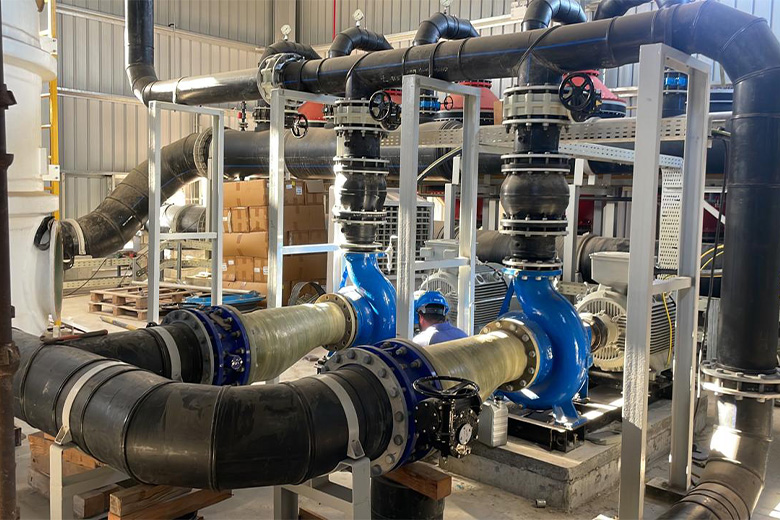
The good news? This problem has been solved. Sugar mills that have switched to pumps specifically designed for high-viscosity applications report dramatically better results.
The UMHQ Pump Design (Specialized for Syrup and Melt)
These pumps are engineered completely differently from standard centrifugal pumps. They use a semi-open impeller design that won’t clog with crystallizing sugar and is easy to clean. A built-in repeller system reduces pressure at the stuffing box, minimizing product leakage and dramatically extending seal life—no more constant seal replacements. The construction is heavy-duty with an oversized shaft, stainless steel for sugar contact surfaces, built-in stuffing box cooling, and hydraulically balanced operation to eliminate vibration. Most importantly, they’re designed to handle liquids up to 1,000 SSU (approximately 220 cSt or 294 cP for sugar syrup) which covers high-concentration syrups like 68° Brix.
The Torque Flow Pump (for Mill House and Diffuser Applications)
For applications involving fibrous materials and suspended solids, these pumps use a unique approach. Instead of a conventional impeller, they use hydrodynamic coupling with an unobstructed flow path. This means large passage size that prevents plugging from fibers and bagasse particles, gentle handling that prevents crystal damage, and no close clearances to maintain. They excel where standard pumps get clogged.
Dynamic Sealing Pumps - UMOR (for FFE and Juice Applications)
For falling film evaporators and juice recirculation, these pumps eliminate the main failure point entirely. Using a repeller to create a dynamic seal means no external mechanical seal, no constant seal failures, dramatically reduced maintenance, and prevention of product leakage. It’s a fundamentally different approach that solves the sealing problem at its root.
Matching the Right Pump to Each Process Stage
Different stages of sugar processing need different solutions:
Evaporator Feed and Circulation (up to 68 Brix)
- Moderate viscosity
- High temperatures
- Need: Reliable sealing, gentle handling
- Solution: Dynamic sealed pumps with repeller systems
Syrup Transfer Lines (65-75 Brix)
- Increasing viscosity
- Suspended particles
- Need: Handle moderate thickness, maintain flow
- Solution: UMHQ semi-open impeller pumps
Molasses Handling (above 75 Brix)
- Very high viscosity
- Crystallization tendency
- Need: Positive displacement or heavy-duty design
- Solution: Specialized high-viscosity pumps
Massecuite Transfer (High Crystal Content)
- Thick with high solids
- Large crystals present
- Need: Don’t damage crystals, maintain flow
- Solution: Torque flow pumps with large passages
What Mills Report After Switching
Mills that have been upgraded to proper high-viscosity pumps typically see three major improvements. On the maintenance side, seal life extends from months to over a year, emergency calls drop significantly, and maintenance becomes predictable instead of reactive. Energy-wise, they see lower power consumption, cooler motor operation, and reduced water needs. Operationally, there are fewer mid-season failures, more predictable performance, and significantly less stress on maintenance teams. The investment in proper equipment pays back through reduced downtime, lower maintenance costs, and better operational reliability.
Practical Considerations for Global Sugar Mills
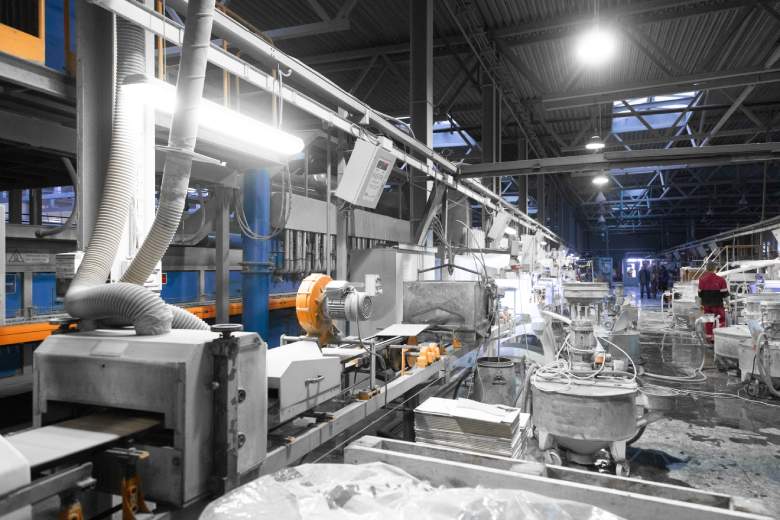
Sugar mills operate in diverse locations—Middle East, Africa, Southeast Asia, Indonesia, Thailand, India, and beyond. When selecting pumps, climate matters: high ambient temperatures affect cooling, humidity impacts electrical systems, and dust from bagasse is everywhere. Supply chain reality is equally important: you need spare parts available in your region, local service support or authorized partners, reasonable shipping times for critical components, and technical support in your time zone. Make sure any equipment meets international certifications (ISO 9001, ISO 2858, ISO 5199), electrical standards for your country, and local safety and environmental regulations.
Making the Business Case
When presenting this to management, focus on measurable impacts. Document your current state with standard pumps: track failure frequency, calculate downtime hours per season, add up maintenance labor costs, measure energy consumption, and count emergency part orders. Compare this to the proposed state with specialized pumps showing expected reduction in failures, predicted maintenance cost savings, energy efficiency improvements, fewer emergency situations, and more stable production. Most mills find that specialized pumps pay for themselves within 12-24 months through reduced downtime and maintenance costs alone, with energy savings as an added bonus.
Stop Accepting Pump Failures as Normal
Frequent pump failures in syrup applications aren’t something you have to live with. They’re a sign that the equipment doesn’t match the application.
The crushing season is demanding enough without preventable breakdowns. Every unplanned shutdown costs you production, puts stress on your team, and eats into your profitability.
Mills worldwide have solved this problem by using pumps specifically designed for high-viscosity, high-temperature sugar applications. They’re seeing fewer failures, lower maintenance costs, and more reliable operations.
The question isn’t whether specialized pumps work better—decades of experience across hundreds of mills prove they do. The question is: when will you stop accepting failures as inevitable and start using equipment designed for the job?
Partner with Global Procurement Experts
EuroIndustriel: Simplifying Industrial Procurement Worldwide
EuroIndustriel specializes in helping industrial facilities source the right equipment from trusted manufacturers worldwide. Operating across the Middle East, Africa, Southeast Asia, Indonesia, Thailand, and beyond, we connect sugar mills with proven solutions from established manufacturers.
Our partnership with Sintech Pumps gives sugar mills access to over 30 years of specialized experience in sugar industry applications. Sintech has supplied pumps to over 650 sugar factories worldwide, with experience ranging from small 500 TCD mills to large 25,000 TCD operations.
Together, we provide:
✓ Application-specific pump solutions designed for sugar syrup and molasses handling
✓ Global supply chain support with local service capabilities across multiple continents
✓ Technical expertise from specification through installation and commissioning
✓ Competitive procurement through strategic supplier relationships
✓ Ongoing support including spare parts availability and maintenance assistance
Whether you’re running a small regional mill or a large modern facility, we can help you solve your pumping challenges with proven solutions.
Let’s talk about your specific situation:
📧 Email: sales@euroindustriel.com
📞 Phone: +91 9319083345
🌐 Website: www.euroindustriel.ae
