


Choosing the Right Industrial Pump
A Practical Guide for Reliability and Efficiency
Industrial pumps are the beating heart of countless processes—moving water, chemicals, slurries, fuels, and more across industries. When pumps fail or are incorrectly specified, entire operations stall, leading to downtime, energy waste, and significant costs. For businesses striving for efficiency and sustainability, choosing the right pump is not optional—it’s mission-critical.
This guide walks you through pump types, applications, procurement pitfalls, international standards, and how EuroIndustriel, in partnership with Sintech Pumps, ensures your procurement decisions deliver reliability, efficiency, and long-term value.
Why Pump Choice Matters
Pumps are central to:
- Uptime: A correctly sized pump ensures continuous operation and avoids premature failure.
- Energy Efficiency: Pumping systems can account for 20–30% of total plant energy use. The right pump cuts energy bills drastically.
- Product Quality: In sectors like sugar or chemicals, pump performance directly impacts product yield and quality.
When pump selection is treated casually, plants risk:
- Excessive wear and tear
- Cavitation and vibration
- High maintenance costs
- Frequent downtime
Correct pump selection isn’t just about matching flow and head—it’s about understanding the fluid, the duty cycle, and the operating environment.
Pump Types & Applications – Sintech Portfolio Explained
Sintech Pumps, established in 1986, offers one of the most comprehensive industrial pump portfolios in India, trusted by 500+ customers worldwide. Below are the key categories and where they excel:
| Pump Type | Applications | Key Features |
|---|---|---|
|
Centrifugal Pumps (CPS Series) |
Chemicals, refineries, power, process industries |
ISO 2858/ISO 5199 design, robust, versatile |
|
Dynamic Sealing Pumps |
Sugar, juice, food-grade |
Operates without external sealing systems—reduced leakage risks |
|
Torque Flow Pumps (STF) |
Slurries, wastewater, abrasive fluids |
Non-clog impeller, reliable in tough media |
|
Horizontal Mixed-Flow Pumps |
Irrigation, water transfer, effluent |
High-volume handling, durable design |
|
Split Casing Pumps (SCS Double Suction) |
Utilities, desalination, HVAC, steel |
Easy maintenance, high efficiency at large flows |
|
Multistage High Pressure Pumps |
Steel plants, power, desalination, boiler feed |
Handles extreme pressures with high reliability |
|
Vertical Turbine & Axial Flow Pumps |
Irrigation, desalination intake, process |
Customizable, efficient for deep wells or high flows |
|
Vacuum & Liquid Ring Pumps |
Process, paper, pharma |
Efficient for vapor handling, reliable under fluctuating loads |
By tailoring pumps to specific industries—sugar, steel, paper, power, desalination, and irrigation—Sintech ensures each application has a fit-for-purpose solution.
Common Mistakes in Pump Procurement
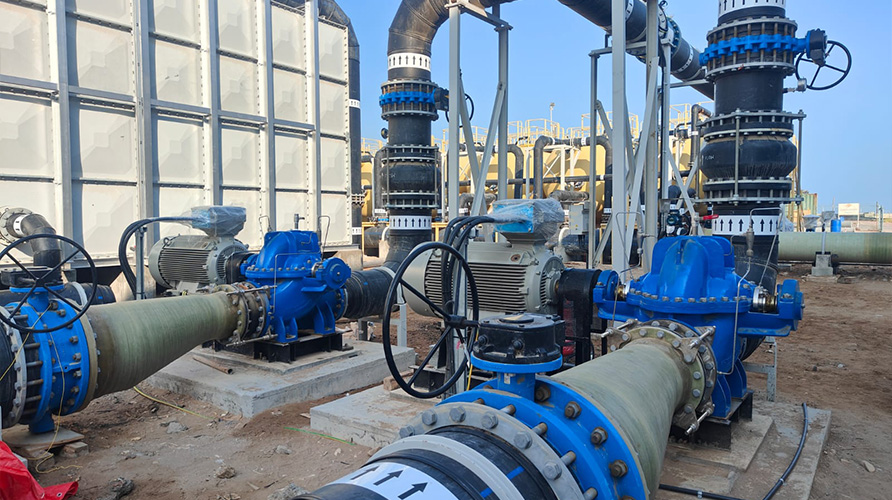
Even experienced procurement teams, engineers, and plant managers can fall into traps when selecting pumps. While the specifications may appear straightforward—flow rate, head, materials—errors often arise in interpretation, assumptions, and lack of lifecycle perspective. These mistakes directly impact operational costs, uptime, and long-term reliability.
- Over-Sizing or Under-Sizing the Pump
One of the most frequent issues is incorrect sizing. A pump that is oversized for its duty consumes excessive energy, operates away from its best efficiency point (BEP), and creates problems like vibration, cavitation, and seal failures. Under-sized pumps, on the other hand, are forced to operate continuously at higher loads, shortening bearing life and leading to frequent breakdowns. Both scenarios not only raise energy costs but also accelerate component wear.
- Consequence: Increased OPEX, reduced mean time between failures (MTBF).
- Best Practice: Always size pumps using accurate process data and consult the performance curves. Consider system variations such as seasonal demand or fluid changes.
- Ignoring Fluid Properties
Fluids are not always “just water.” Viscosity, temperature, abrasiveness, or corrosive nature of the liquid drastically affect pump performance and material selection. A pump chosen without accounting for these can corrode within months, erode impellers, or seize when handling slurries.
- Example: Sugar juice requires dynamic sealing solutions to avoid crystallization. Slurry-rich wastewater demands torque flow impellers.
- Best Practice: Document complete fluid characteristics (pH, solids %, temperature, viscosity) before selection and match with materials like stainless steel, duplex alloys, or special coatings.
- Over-Reliance on a Single Vendor
Sticking to one vendor may seem convenient, but it exposes the operation to risks of supply chain delays, price escalations, or lack of technical flexibility. A single-source strategy is fragile when global disruptions occur—as seen during pandemic supply shortages.
- Consequence: Production delays, high pricing power in vendor’s favor.
- Best Practice: Partner with procurement specialists like EuroIndustriel who maintain multi-OEM partnerships (e.g., Sintech Pumps, Vetta Valves). This ensures competitive pricing, backup sourcing, and reliable lead times.
- Neglecting Lifecycle Costs
Procurement teams sometimes focus only on the lowest purchase price, ignoring the total cost of ownership (TCO). A cheap pump may consume more power, need frequent seal replacements, or fail prematurely. Over 70% of pump-related costs in a plant arise during operation—not purchase.
- Consequence: “False economy” where short-term savings turn into higher O&M costs.
- Best Practice: Evaluate TCO including energy use, maintenance, spare part availability, and expected service life.
- Skipping Maintenance & Spares Planning
Procurement does not end at pump delivery. Without maintenance planning, spares stocking, and service contracts, even the best pumps fail early. Plants that overlook MRO (Maintenance, Repair, Operations) face unplanned downtime because a critical spare seal or bearing isn’t available when needed.
- Best Practice: Integrate pump procurement with an MRO strategy. Maintain spare kits for critical pumps, align with preventive maintenance schedules, and ensure suppliers can support with field service.
The common denominator across these mistakes is a short-term outlook. Pumps are long-life assets that must be procured with a holistic view: sizing precision, fluid compatibility, vendor diversity, lifecycle economics, and MRO integration.
👉 This is where EuroIndustriel × Sintech Pumps stands apart: by offering a technically sound, globally reliable procurement framework that ensures the right pump is chosen, supported, and maintained—maximizing uptime and efficiency.
Standards & Testing – Why Compliance Matters
Industrial pumps must withstand harsh duty conditions, and global standards ensure they do.
- ISO 2858 / DIN 24255: Defines pump dimensions and performance, enabling interchangeability.
- ISO 5199: Specifies design and operational requirements for chemical process pumps.
- IS 9137 / ISO 9906: Sets testing requirements for hydraulic performance.
Sintech Pumps designs and manufactures pumps to these standards, with rigorous QA procedures including:
- Raw material inspection
- In-process monitoring
- Final hydraulic performance tests
This ensures pumps are safe, efficient, and reliable under demanding industrial conditions.
EuroIndustriel Advantage – Reliable Procurement Partner
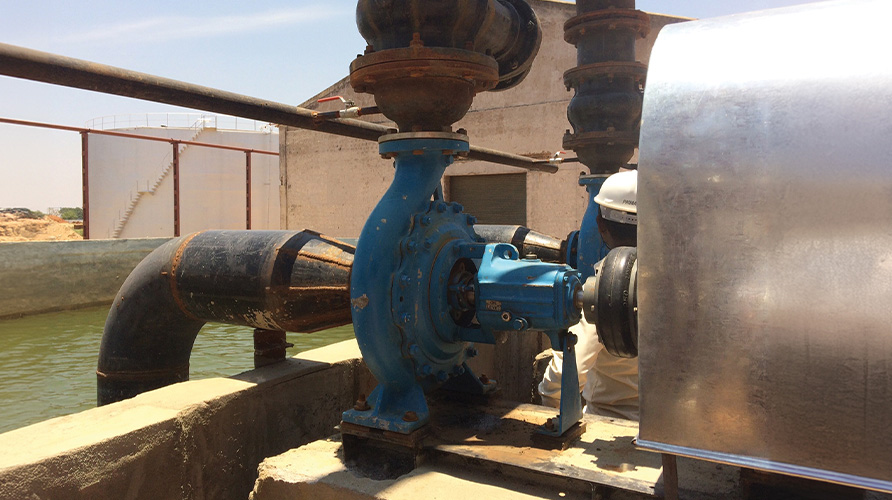
EuroIndustriel isn’t just a distributor. It’s a procurement partner bridging Sintech’s engineering strength with global sourcing and customer support.
Why choose EuroIndustriel?
Broad Product Range
Pumps, valves, motors, panels, piping, and MRO solutions.
Global Network
Strong ties with OEMs like Sintech Pumps and Vetta Valves.
Local Expertise
Understanding of regional market needs across sugar, power, steel, and desalination.
Lifecycle Support
Beyond supply—maintenance, spares, and technical consultation.
Assured Reliability
99% on-time delivery track record.
Lifecycle Support
Beyond supply—maintenance, spares, and technical consultation.
This combination ensures industries don’t just buy pumps—they buy long-term reliability and performance.
Choosing the right pump is not simply a procurement decision—it’s an investment in uptime, energy efficiency, and product quality. With Sintech’s ISO-compliant range and EuroIndustriel’s procurement expertise, industries gain access to pumps that are:
- Durable and efficient
- Application-specific and compliant with global standards
- Supported by expert technical guidance
📞 Contact us today to explore the full Sintech range.
🌐 Visit: www.euroindustriel.ae | 📧 sales@euroindustriel.ae | 📞 +91 93190 83345
