


The Complete Guide to Specifying & Sizing Industrial Pumps
This comprehensive guide walks you through the critical steps for specifying and sizing industrial pumps—ensuring optimal performance, longevity, and cost-efficiency. Tailored to the extensive Sintech Pumps portfolio, this resource covers selection criteria, interpreting performance curves, material considerations, installation practices, and maintenance best practices. Whether you’re designing a new process or upgrading existing equipment, you’ll gain actionable insights to make informed decisions.
1. Introduction to Industrial Pump Selection
Industrial pumps are the heart of fluid handling systems, critical in applications from municipal water treatment and large-scale desalination to chemical processing and power generation. A correctly specified pump ensures that processes operate at the desired flow rate and pressure, avoids wasted energy, and prevents unnecessary wear on components.
Choosing the right pump affects:
- Energy Consumption: Operating outside optimal efficiency can dramatically increase power costs over a pump’s life.
- Total Cost of Ownership (TCO): Purchase price, installation costs, maintenance expenses, and downtime all contribute to TCO.
- Reliability and Uptime: A pump matched to system demands minimizes the risk of premature failure and unplanned stoppages.
- Safety and Compliance: Proper materials and design help meet industry regulations and protect personnel.
Sintech Pumps, with over three decades of expertise, provides a diverse range of centrifugal, vertical multistage, high-pressure, and specialty pumps. Our custom fabrication capabilities ensure that even the most demanding applications receive a pump engineered for success.
2. Defining System Requirements
Before selecting a pump, gather detailed system parameters. A thorough understanding of these requirements is critical to avoid oversizing or undersizing:
Flow Rate (Q)
Determine the volume of fluid to be moved in a given time, expressed in cubic meters per hour (m³/h) or gallons per minute (GPM). This figure often originates from process design specifications or desired throughput.
Total Dynamic Head (TDH)
TDH is the energy the pump must impart to the fluid to overcome static lift, friction losses in pipes and fittings, and discharge head. Calculate TDH by summing the vertical height difference, pipe friction coefficients, and system operating pressures.
Fluid Properties
Characterize fluid density, viscosity, temperature, and chemical composition. Highly viscous or abrasive fluids may require specialized impeller designs or wear-resistant materials, while corrosive fluids necessitate chemically resistant alloys.
System Pressure
Document suction and discharge pressures to ensure the chosen pump accommodates existing piping and tank pressures without cavitation or excessive backpressure.
Operating Profile
Clarify whether the pump operates continuously, in start-stop cycles, or varies with demand. Variable loads often benefit from Variable Frequency Drives (VFDs) to maintain efficiency across changing conditions.
Collecting accurate data at this stage sets the foundation for the remaining specification process.
3. Interpreting Performance Curves
Performance curves graphically represent a pump’s capabilities, illustrating relationships between flow, head, power, and efficiency. Key components include:
Q-H Curve (Head vs. Flow)
This primary curve shows the head a pump can generate at different flow rates. The intersection of your system curve and the pump’s Q-H curve indicates the operating point.
Efficiency Curve
Efficiency peaks at the Best Efficiency Point (BEP). Operating near the BEP reduces energy consumption and mechanical stress. Avoid prolonged operation in low-efficiency zones to curb running costs.
Power Curve
Indicates the Brake Horsepower (BHP) required to drive the pump at various flows. Ensure motor selection provides sufficient power while allowing a safety margin for overload conditions.
NPSH Curve:
Net Positive Suction Head Required (NPSHR) must remain below what your system can deliver. Insufficient NPSH leads to cavitation, causing noise, vibration, and impeller damage.
Selection Tip
Aim to operate within 75–110% of BEP. If your process demands variable flow, consider VFDs to adjust speed rather than throttling, which shifts the operating point away from the BEP and reduces efficiency.
Sintech’s detailed data sheets include these curves for each model, allowing engineers to align pump selection precisely with system demands.
4. Pump Types & Applications

Sintech Pumps offers technologies suited to a wide array of industrial challenges:
4.1 End-Suction Centrifugal Pumps
Applications: General water transfer, wastewater management, cooling tower circulation.
Features: Simple construction, single-stage impeller, easy maintenance. Ideal for moderate head and flow requirements.
4.2 Split-Case Centrifugal Pumps
Applications: Large volume circulation in power plants, irrigation, and municipal water systems.
Features: Axial-split casing simplifies access for inspection and repair. Provides high flow at medium head with low NPSHR.
4.3 Vertical Turbine & Submersible Pumps
Applications: Deep well extraction, booster stations, sump dewatering.
Features: Compact footprint; submerged design reduces cavitation risk. Vertical multistage options deliver significant head in a small footprint.
4.4 Axial and Mixed Flow Pumps
Applications: Flood control, circulation of large volumes at low head in desalination intake.
Features: Propeller-style impeller for high flow, low-pressure duty. Used where volume outweighs head.
4.5 Progressive Cavity
Applications: Viscous fluids, food and dairy processing, sludge transfer.
Features: Rotor-stator design provides gentle, pulsation-free flow. Suitable for high-viscosity and shear-sensitive liquids.
Each pump family can be tailored with specialized impeller styles, clearances, and materials to match fluid characteristics and performance requirements.
5. Material Selection & Construction
Choosing the correct materials prevents corrosion, erosion, and premature failure:
- Cast iron: Economical for water-based fluids with minimal corrosion risk.
- Stainless steel/duplex SS: Ideal for acids, alkalis, seawater, and higher pressure.
- Bronze: Good for water and mild chemicals.
- SS, Hastelloy, Monel: Required for highly corrosive or abrasive fluids.
- Alloy steels: High strength for extended runs.
- Titanium: For extreme corrosion resistance in seawater applications.
- Mechanical seals: Reliable for high pressure and vacuum.
- Packings: Simpler, cost‑effective for moderate duties.
Sintech’s in-house fabrication enables upgrades to exotic alloys and surface treatments (hard-facing, ceramic coatings) for severe service environments.
6. Motor & Drive Integration

Optimal pump performance relies on proper drive selection:
Motor Sizing
Select motors rated 10–15% above the pump’s maximum BHP to accommodate start‑up torques and variable loads without tripping overload protection.
Variable Frequency Drives (VFDs)
VFDs allow pumps to run at speeds matched to process requirements, reducing throttling losses and achieving up to 30% energy savings in variable-flow systems.
Coupling & Alignment
Use flexible couplings and vibration‑analysis techniques to ensure precise alignment. Misalignment leads to bearing failures and seal leaks over time.
Sintech offers integrated pump‑motor sets with baseplates and alignment jigs for guaranteed smooth operation from day one.
7. Installation & Piping Best Practices
Correct setup ensures system reliability:
- Keep runs short, straight, and gradually tapered.
- Maintain 2–3 m of straight pipe ahead of the pump inlet.
- Avoid air pockets with proper venting.
- Use full‑bore isolation valves and pressure gauges.
- Incorporate expansion joints to accommodate thermal movements.
- Mount pumps on level, vibration‑damped concrete plinths.
- Torque anchor bolts per manufacturer specs.
Experienced field engineers from EuroIndustriel provide on‑site supervision and validation of piping geometry to preserve NPSH margins and operational integrity.
8. Maintenance & Lifecycle Optimization
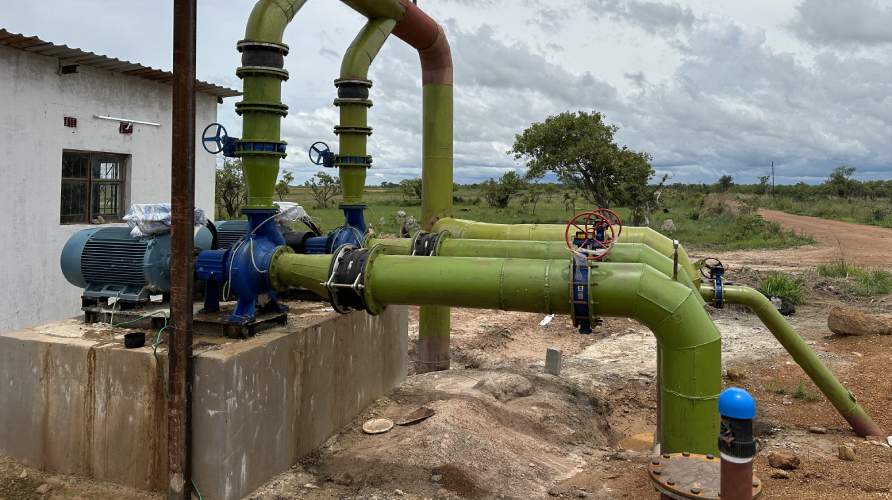
A structured maintenance plan maximizes uptime:
- Routine Inspections:
- Monitor bearing and seal temperatures.
- Listen for unusual noises and measure vibration levels.
- Lubrication Practices:
- Adhere to manufacturer‑recommended grease/oil change intervals.
- Use ISO 680-certified lubricants for high-speed bearings.
- Performance Monitoring:
- Log flow, head, and power draw monthly to detect drift from baseline.
- Investigate deviations above 5% to preempt failures.
- Spare Parts Management:
- Maintain an inventory of critical spares—impellers, mechanical seals, bearings.
- Establish consignment stock or quick‑ship agreements for emergencies.
EuroIndustriel’s MRO services include vibration analysis, thermography, and turnkey overhaul packages to extend pump life and prevent unplanned outages.
9. Energy Efficiency Strategies
Given that energy can represent up to 70% of lifetime pump costs, optimizing efficiency is imperative:
- Operate Near BEP: Minimizes hydraulic losses and extends equipment life.
- System Curve Analysis: Adjust system valves or speeds rather than throttling to maintain efficiency.
- Periodic Audits: Use thermal imaging and power meters to identify underperforming pumps and retrofit VFDs where feasible.
By focusing on these strategies, end users can realize energy savings of 20–30%, directly impacting their sustainability goals.
10. Conclusion & Next Steps
Specifying and sizing pumps requires balancing hydraulic calculations, materials engineering, motor selection, and installation best practices. With Sintech Pumps and EuroIndustriel as your partners, you gain:
- Expert guidance from initial specification through commissioning.
- Customized solutions for even the most challenging fluids and operating conditions.
- Lifecycle support via MRO services, performance monitoring, and energy‑efficiency audits.
Take the next step: Reach out to EuroIndustriel for a detailed system assessment and pump‑selection consultation.
